
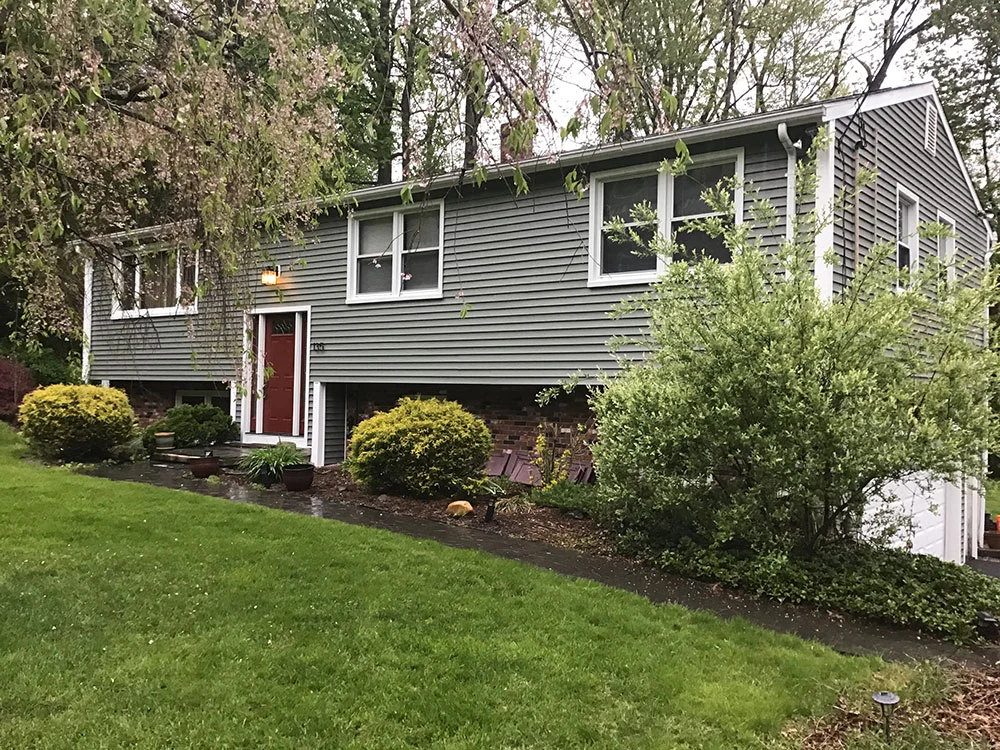
To remove mold from vinyl siding, scrub it with a diluted vinegar or bleach solution, or with oxygen bleach, and then rinse the wall from the top down. Ordinary household cleaners often are not strong enough. The same methods work on mildew and algae, and the whole job can be done with a soft brush, a pump sprayer and a garden hose.
Why Mold, Mildew and Algae Grow on Vinyl Siding
Vinyl siding needs less maintenance than other cladding materials, but it does need some care from time to time. Rainwater and condensation keep the surface damp, and that lets black mold and mildew take hold.
Mold, mildew and algae feed on what collects on the siding: sugars from trees, dirt and dust. That is why growth is usually worst on shaded walls and under overhanging branches.
How to Remove Mold From Vinyl Siding
Mix a Vinegar or Bleach Solution
Prepare one of two solutions in a bucket: 30 percent distilled white vinegar and 70 percent water, or 20 percent household bleach and 80 percent water. Use one or the other. Never mix bleach and vinegar together.
If you use bleach, cover nearby plants with plastic drop cloths first.
Protect Outlets and Lights
Before you spray, turn off the electricity supplying any outdoor outlets or lamps. Cover them with plastic sheeting and tape it to the wall with duct tape.
Scrub, Spray and Rinse
Dip a long-handled brush with soft bristles in the solution and gently scrub away the mildew.
Pour the rest of the solution into a low-pressure pump sprayer or a power washer. Work in sections about five feet wide, starting at the ground and moving up toward the roof. Wet the siding enough that it does not dry out while you work.
Do not spray upward, because the solution could get under the siding. Aim so the spray falls on the siding from above, and use a ladder to reach the high parts of the wall.
When you are done, rinse the sprayer and fill it with clean water. Rinse the siding starting at the top of the house and working down. Repeat section by section until all of the mold and mildew is gone.
Try Oxygen Bleach
Oxygen bleach is another way to remove mold, mildew and algae from vinyl siding. Mix the powder with warm water and stir until it dissolves, then spray it generously on dry siding. It is best to do this when the wall is in the shade.
Let the solution bubble on the siding for about 10 minutes, scrub with a brush and rinse with a hose.
Is a Power Washer Safe for Vinyl Siding?
A power washer is the most effective tool, but it cannot be used on every house. If water is driven behind the siding at lap joints and corners, it can rot the wood underneath when there is no weather barrier under the siding.
This is a concern in older homes. In the past, building codes did not require a weather barrier under vinyl siding, and the siding was nailed directly onto wood sheathing.
Check with the siding manufacturer or installer, or test the power washer on a small, inconspicuous area, before you use it on the whole house.
While You Are Up Close, Inspect Windows and Doors
Cleaning puts you within arm’s reach of every window and door, so use the chance to inspect them. Mold and mildew also collect on old window frames and around door trim, and wood that stays damp will eventually rot.
If you find soft sills or frames that never come clean, vinyl replacement windows wipe down as easily as vinyl siding and do not rot. The same goes for a worn entry door or patio door that has taken on water at the bottom edge.
Need More Than a Cleaning?
Aladdin Inc has worked on Connecticut home exteriors since 1949. If washing the house uncovered windows or doors that are past saving, contact us today or call (203) 776-9996 to go over replacement options.