
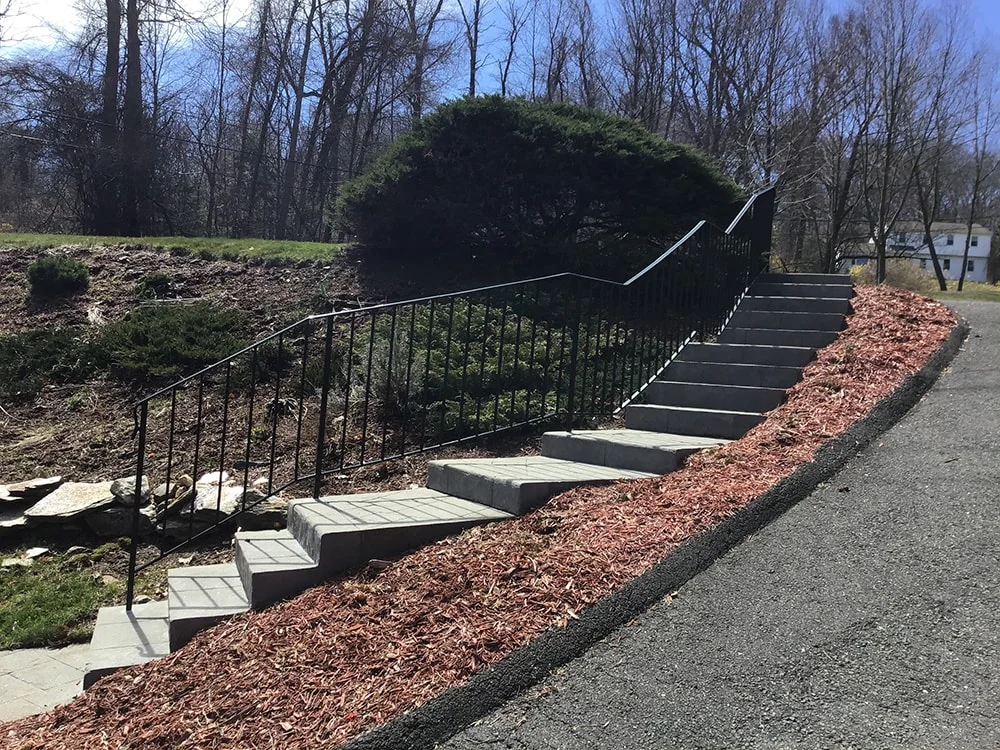
Stair railing installation looks like a manageable weekend project, but small mistakes can lead to big problems with safety, durability and building code compliance. The most common ones are wrong measurements, weak mounting, materials that do not hold up outdoors, and ignoring the condition of the steps themselves.
If you are researching outdoor railings for steps, knowing these errors ahead of time can save you costly repairs and a lot of frustration.
Common Stair Railing Installation Mistakes
Improper measurements and spacing
Incorrect measuring is one of the most frequent mistakes. Railing height, post spacing, the gaps between balusters and the size of the handrail grip are often governed by local building codes. Being off by even an inch can mean a failed inspection or a railing that feels unstable.
Stairs add a complication that flat runs do not have, because the railing has to follow the slope of the steps and stay at a consistent height along the way. Experienced installers measure precisely from the start and check local requirements before anything is cut or drilled.
Weak or insecure mounting
An outdoor stair railing has to withstand constant use, weather exposure and seasonal expansion and contraction. Do-it-yourself installs often rely on surface mounting or the wrong fasteners, which loosen over time.
Without proper anchoring into concrete or framing, a railing can start to wobble. Worse, it can fail at the moment someone grabs it to stop a fall. Secure mounting is the main thing that separates professional aluminum and wrought iron railing installation from a quick fix.
Choosing the wrong material for outdoor use
Not every material is built for Connecticut’s climate. Wood railings may warp or rot, and low-quality metals can rust early. Durable metal railings, including aluminum systems, are designed to handle moisture, snow and temperature swings with minimal maintenance.
The fasteners matter as much as the railing. Hardware that is not rated for outdoor use can corrode long before the railing does, leaving rust stains and a loose connection.
Overlooking drainage and step conditions
A railing is only as sound as what it is attached to. A common oversight is installing a new railing on uneven steps, crumbling concrete or a spot where water pools. These underlying issues can compromise even the best railing system if they are not corrected first.
Water that collects around the base of a post and freezes in winter is especially hard on the mounting. Keeping rain and snow off the steps helps too, which is one reason homeowners add door canopies and window awnings over an entrance.
Why Professional Stair Railing Installation Matters
A professional installation makes sure your stair railing is safe, code-compliant, visually consistent with the house and built to last. The installer takes responsibility for the measurements, the anchoring and the choice of material, and can spot problems with the steps before the railing goes in.
It is also a chance to look at the entrance as a whole. If the steps lead to a worn front door, new entry doors and a new railing chosen together give the front of the house a finished look.
Frequently Asked Questions
Can I install a stair railing myself?
You can, but you are responsible for meeting local code on height, spacing and grip size, and for anchoring the railing so it will hold a person’s full weight. Many homeowners decide the safety risk is not worth it.
What is the best material for outdoor stair railings in Connecticut?
Metal railings such as aluminum are a durable choice because they handle moisture, snow and temperature swings with very little maintenance.
Why is my stair railing wobbly?
Usually because fasteners have loosened or the railing was never anchored properly into concrete or framing. Deteriorating steps can cause it as well.
Have Your Stair Railing Installed Right
At Aladdin Inc., our team handles every detail, from material selection to expert installation, so homeowners can feel confident in their investment. We are a family-owned company in Wallingford and have been working on Connecticut homes since 1949.
Call (203) 776-9996 or contact us for a stair railing estimate.