
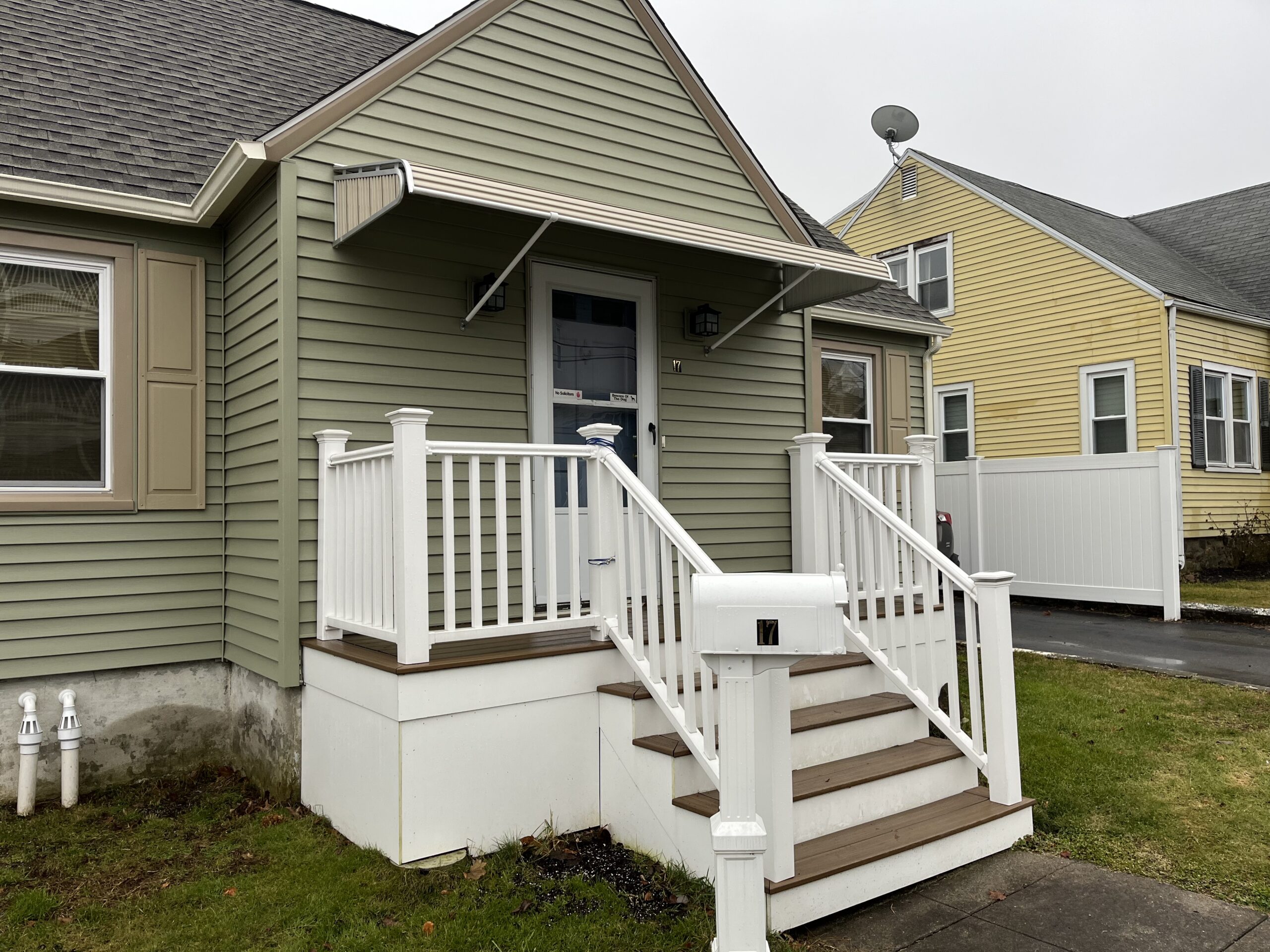
A good deck safety checklist starts with the railings, then moves to the boards, the steps and the connections that hold everything together. Connecticut winters are hard on outdoor structures, so run through these checks each spring before you host your first gathering.
Your Spring Deck Safety Checklist
1. Shake the railings
Grab each section of railing and give it a firm shake. If it feels loose or unstable, treat that as a clear warning sign. Railings are what prevent falls, especially on an elevated deck, so any movement should be dealt with right away.
Loose railings can often be reinforced. Older or deteriorating systems may need to be replaced for safety and to meet building codes. New aluminum or wrought iron railings are a durable, low-maintenance option for decks, porches and steps.
2. Look for rot, rust and structural damage
Wooden decks are especially vulnerable to moisture after a long winter. Check for soft spots, discoloration and splintering boards. Press a screwdriver into any area that looks suspect. If it sinks in easily, the wood is decaying.
Check the metal parts too. Fasteners and brackets with rust or corrosion can weaken the structure over time.
3. Inspect steps, supports and connections
Loose or uneven steps are a serious tripping hazard. Walk every stair and note anything that shifts or feels uneven.
Then look at the support posts and joists underneath, since a weakened support can compromise the whole deck. Make sure screws, nails and anchors are tight and undamaged, particularly where the deck attaches to the house.
4. Check the porch and front steps
Do the same on your porch. Test the handrails, look at the stair treads, and check the condition of anything overhead. A door canopy over the entrance helps keep rain and ice off the steps, which makes them safer through the year.
Why Winter Damage Is Easy to Miss
Snow buildup, ice and swinging temperatures can affect a deck or porch without leaving obvious marks. Freeze-thaw cycles make materials expand and contract, and that movement gradually loosens connections.
A deck can look fine at a glance and still have problems below the surface. That is why a hands-on check each spring matters more than a quick look from the back door.
Repair or Replace?
Minor issues can usually be repaired. A few loose fasteners or one or two damaged boards are routine fixes.
Widespread rot, instability that keeps coming back, or an outdated railing system points toward replacement as the safer long-term answer. If you are unsure about the structure itself, have a qualified professional look at it before you put weight on it.
Frequently Asked Questions
How often should I inspect my deck?
At least once a year. Spring is the best time because it follows the season that does the most damage.
How do I know if a railing is unsafe?
Any wobble when you push or pull on it is a problem. Rusted fasteners, cracked posts and rotted wood at the base are also signs it needs attention.
Can a loose railing be fixed, or does it need to be replaced?
It depends on the cause. A loose fastener can be tightened or replaced. If the posts or the material itself have deteriorated, replacement is the safer choice.
Found a Loose or Worn Railing?
If your inspection turns up railings that wobble, rust or no longer feel secure, Aladdin Inc. can help with professional railing installation. Contact us to schedule a free estimate, or call (203) 776-9996, and get your deck or porch ready for the season.