
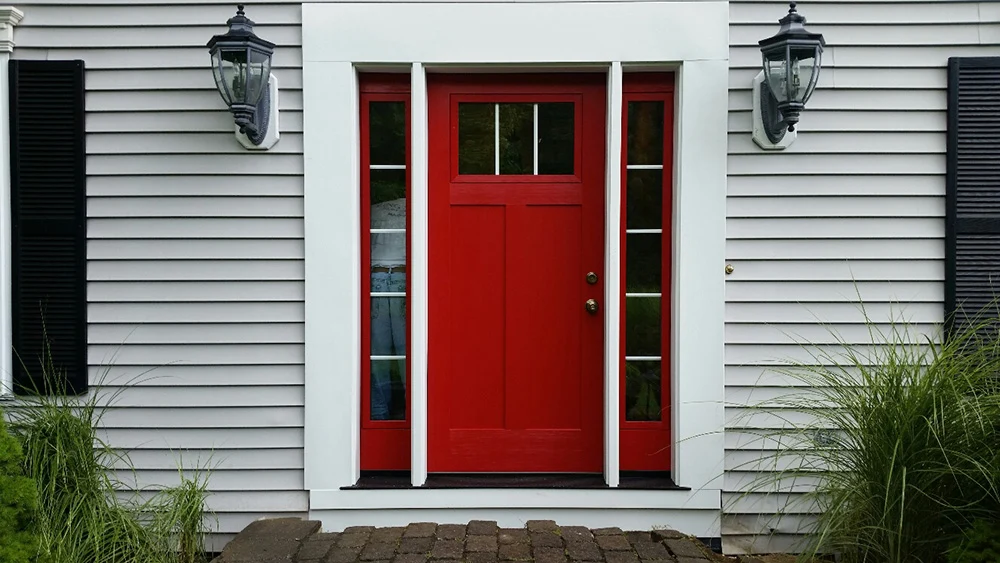
If you are wondering how to paint primed doors, the short answer is that most of the prep is already done: the factory primer is the base coat, so you clean the surface, sand it lightly if needed and apply your finish color. Primed is one of three common ways to buy a door. The others are fully decorated and unfinished, and the one you choose affects both the cost and how much work is left for you.
Here is how the three options compare, and what to expect if you are shopping for new entry doors and patio doors for a Connecticut home. Our guide on how to choose patio doors covers styles and designs in more detail.
Fully Decorated Doors
These doors arrive finished. They have been primed and painted or stained at the factory, often with multiple coats and sometimes with a decorative design. Once the door is hung, the job is done.
This is the least work for the homeowner, and a factory finish is applied under controlled conditions, which generally gives an even, durable result. The trade-off is that you choose from the colors and finishes the manufacturer offers.
Unfinished Doors
Unfinished doors arrive in their raw state with no primer, paint or stain. Structural details such as panels are in place, but the surface is bare.
This gives you the most flexibility with color and finish, and it can help keep the purchase price down because you do the priming and painting yourself. It is also the usual choice if you want a natural wood look with a stain or clear finish.
Primed Doors: The Middle Option
Pre-primed doors come with a base coat of primer already applied, so you can go straight to painting them the color you want. Since primer works under nearly any paint color, it does not limit your design choices, but it does save a step.
One caution: a primed door is meant to be painted. If you plan to use stain or a clear wood finish, primed is not the right option for you.
How to Paint Primed Doors
Start by wiping the door down to remove dust and any marks from shipping. If the primer feels rough, sand it lightly with fine sandpaper and wipe it clean again.
Remove or mask the hardware and any glass. Apply a quality exterior paint in thin, even coats, working on the panels first and then the flat areas around them. Two coats usually give better coverage and durability than one heavy coat.
Do not skip the edges. The top, bottom and sides of an exterior door need paint too, because bare edges can let moisture in. Let the paint dry fully before closing the door against the weatherstripping, and check the manufacturer’s instructions for the type of paint they recommend.
Which Door Finish Should You Choose?
If you want the least work and a consistent finish, choose a fully decorated door. If you have an exact color in mind and are comfortable with a brush, a primed door is a practical middle ground. If you want stained wood, start with an unfinished door.
Whatever you pick for the entry door, a storm door in front of it helps protect the finish from rain, snow and sun so it lasts longer between touch-ups.
Frequently Asked Questions
Do I need to prime a door that is already primed?
Usually not. The factory primer is the base coat. If it has been scratched down to bare material or has sat exposed for a long time, spot prime those areas before painting.
Can I stain a primed door?
No. Stain needs to soak into bare wood, and primer blocks that. For a stained finish, buy an unfinished or factory-stained door.
How soon should a primed door be painted?
Primer is not a finish coat and is not meant to face the weather for long. Plan to paint an exterior door soon after it is installed, following the manufacturer’s guidance.
Get Help Choosing Your Doors
Aladdin Inc. has been helping Connecticut homeowners with doors and other exterior products since 1949, including ProVia doors. To talk through finish options for your home, contact us or call (203) 776-9996.