
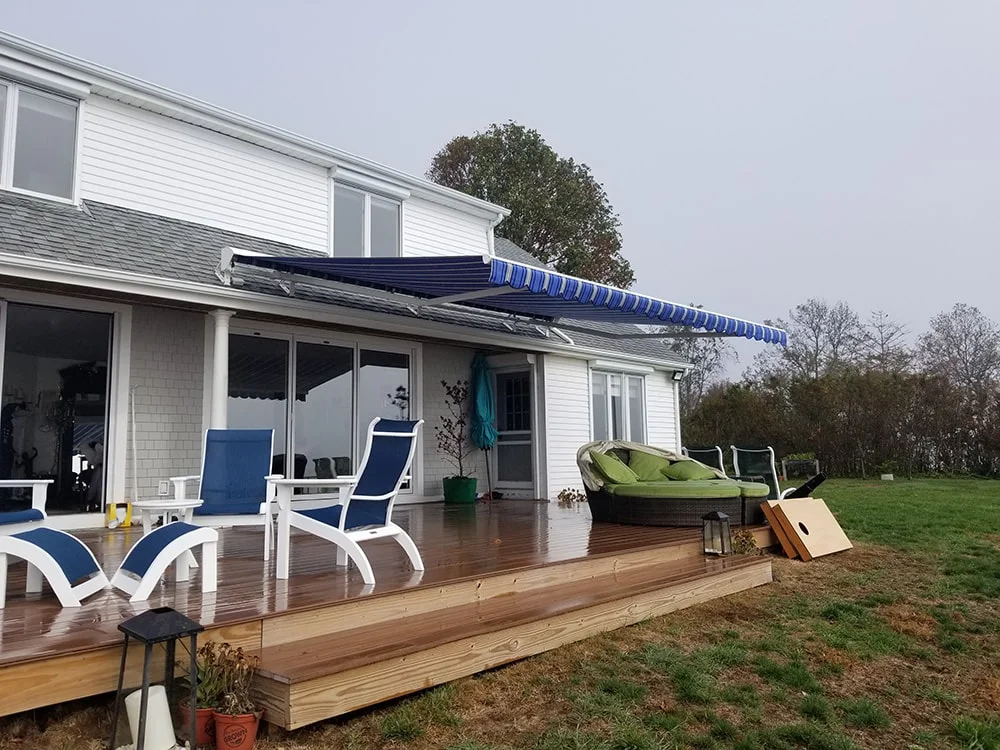
The most effective energy-efficient home upgrades for the exterior are the ones that control heat at the openings: shade over windows and doors, low-e glass, storm doors and well-insulated replacement windows. Many of the same improvements that keep a Connecticut house cooler in summer also hold heat in during winter, so you benefit in both seasons without leaning so hard on the air conditioning or the furnace.
Shade the House From the Outside
Stopping the sun before it reaches the glass is more effective than dealing with the heat once it is inside. That is the job of awnings and canopies.
Door canopies and window awnings
Aluminum door canopies and canvas window awnings protect your entryway and windows from sun as well as rain and snow. Shading the front door and the sunniest windows helps keep the rooms behind them cooler and can reduce your need for air conditioning. They also protect doors, floors and furnishings from UV damage, keep the entry cleaner and add an attractive detail to the front of the house.
Retractable awnings for decks and patios
Retractable awnings for decks and patios do two jobs. They give you a shaded place to sit outside, and they keep the summer sun off the windows and patio doors behind them, which keeps the house cooler naturally. On a mild winter day you can leave the awning retracted and let the sun warm the rooms.
Functional shutters
Many homes have decorative shutters, but shutters were once a practical way to keep a house warm in winter and cool in summer. Functional shutters that close over windows, French doors and other openings still do that job in a climate with hot summers and cold winters.
Energy-Efficient Home Upgrades for Windows and Doors
Low-e glass
Low-e, or low-emissivity, glass is designed to reduce the transfer of heat through a window. The glass has a microscopically thin coating that reflects heat while still letting daylight through. It cuts the amount of infrared and ultraviolet light entering the house. In summer that means less solar heat coming in. In winter the same coating helps keep indoor heat from escaping.
Vinyl replacement windows
If your windows are old, you may be leaking warm air in winter and cool air in summer. Vinyl replacement windows are strong, durable and low maintenance, and vinyl is a good insulator that resists heat transfer, which helps cut heating and cooling costs throughout the year. Vinyl frames also hold up to harsh weather without needing paint. Read more about vinyl window replacement in Connecticut.
Storm doors
Storm doors can seem like an extra, but in New England they make a real contribution to a home’s energy efficiency. Storm doors add a second layer at the entry that improves thermal performance through winter. They also let you open your main entry door to bring in natural light while the closed storm door keeps the heated or cooled air inside.
Frequently Asked Questions
Which exterior upgrade should I do first?
Start where you feel the problem. If certain rooms overheat on summer afternoons, shade those windows. If you feel drafts in winter, look at the windows and doors themselves.
Do awnings really lower cooling costs?
Awnings block direct sun before it passes through the glass, so the shaded rooms gain less heat and the air conditioner has less work to do. The effect is greatest on windows that face south and west.
Does low-e glass make rooms darker?
No. The coating is designed to reflect heat without noticeably reducing the visible light that comes through the window.
Find the Right Upgrades for Your Home
Every house loses and gains heat in different places. Aladdin Inc has been improving Connecticut homes since 1949 and can look at your windows, doors and sun exposure and suggest where an upgrade would help most. Call (203) 776-9996 or get in touch to schedule a visit.