
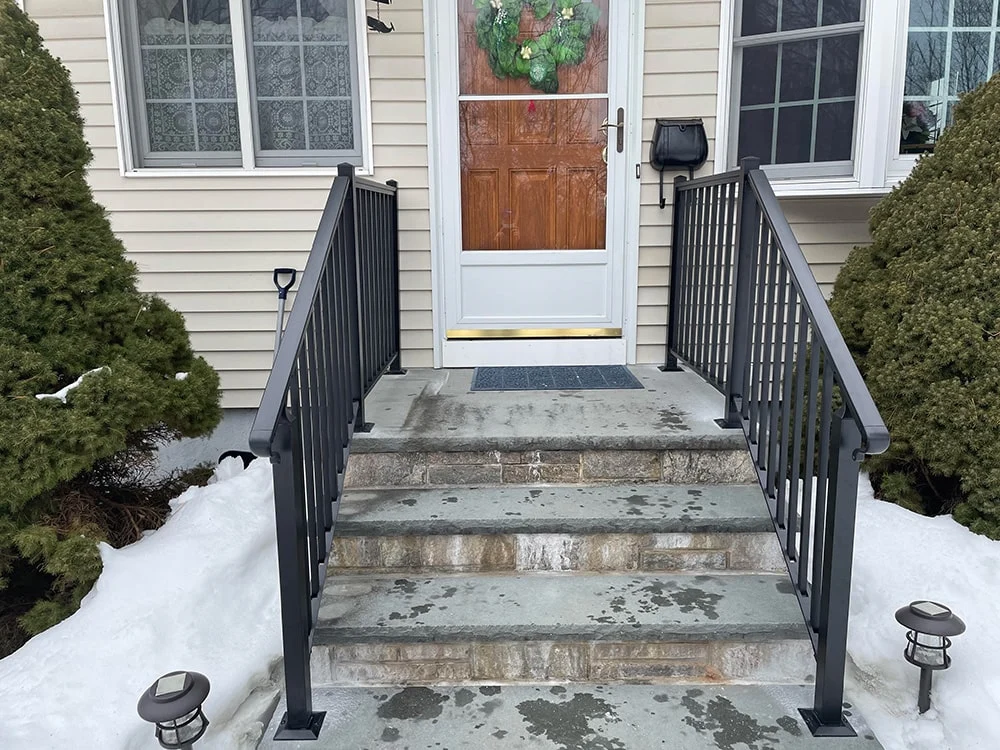
Entry doors and railings take more weather than almost any other part of a Connecticut home. They sit at the front entry, fully exposed to freezing temperatures, moisture and repeated freeze-thaw cycles. The ones that last share two things: materials that do not rot, rust or warp, and careful installation that keeps water and cold air out.
Here is how winter affects each, and what to look for when you replace them.
How Freeze-Thaw Cycles Affect Entry Doors
Through the winter, temperatures swing above and below freezing, and building materials expand and contract with every swing. A poorly built or poorly installed door can warp, crack or let moisture in. Over time that shows up as air leaks, a door that sticks, and higher energy costs.
Quality entry doors made for this climate are built to resist that movement and hold a tight seal in every season.
Preventing Drafts, Warping and Moisture Damage
An energy-efficient entry door keeps cold air out and warm air in. Three things do most of the work: an insulated core, good weatherstripping, and a precise installation.
Proper sealing protects more than your comfort. It also keeps condensation and water away from the flooring and framing around the door, where long-term moisture leads to rot.
On an exposed entrance, a storm door adds a second layer that takes the wind, rain and snow before they reach the main door.
Railing Materials Built for Snow and Ice
Railings have to stand up to snow, ice buildup and constant moisture. Aluminum is a popular choice because it is durable and rust-resistant. Glass railings offer a modern look while keeping strength and visibility, and composite railings are low maintenance with good weather resistance.
The right material depends on how exposed the entry is, the look you want, and your safety needs. Aladdin Inc. installs aluminum and wrought iron railings for steps, porches and decks.
Safety and Code Compliance on Winter Steps
Icy conditions raise the risk of slips and falls, which makes the railing a key safety feature. Proper height, spacing and structural support all matter, especially on stairs and raised entries.
A professionally installed railing is anchored securely and set up to meet local building codes, so it gives dependable support when the steps are slick.
Upgrading Entry Doors and Railings Together
Replacing the door and the railings at the same time gives the front of the house a finished, consistent look. You can match materials, finishes and design styles instead of fitting a new piece next to an old one. The result improves curb appeal and adds long-term value, and every part of the entry is ready for the weather.
If the entrance has no roof overhang, consider adding a door canopy as part of the same project. It keeps rain and snow off the door, the landing and whoever is standing there.
Plan a Front Entry That Lasts
If your door sticks or leaks air, or your railing has started to loosen or rust, it is worth looking at the whole entry before another winter. Aladdin Inc. has worked on Connecticut homes from its Wallingford base since 1949. Call (203) 776-9996 or contact us to discuss doors and railings for your home.