
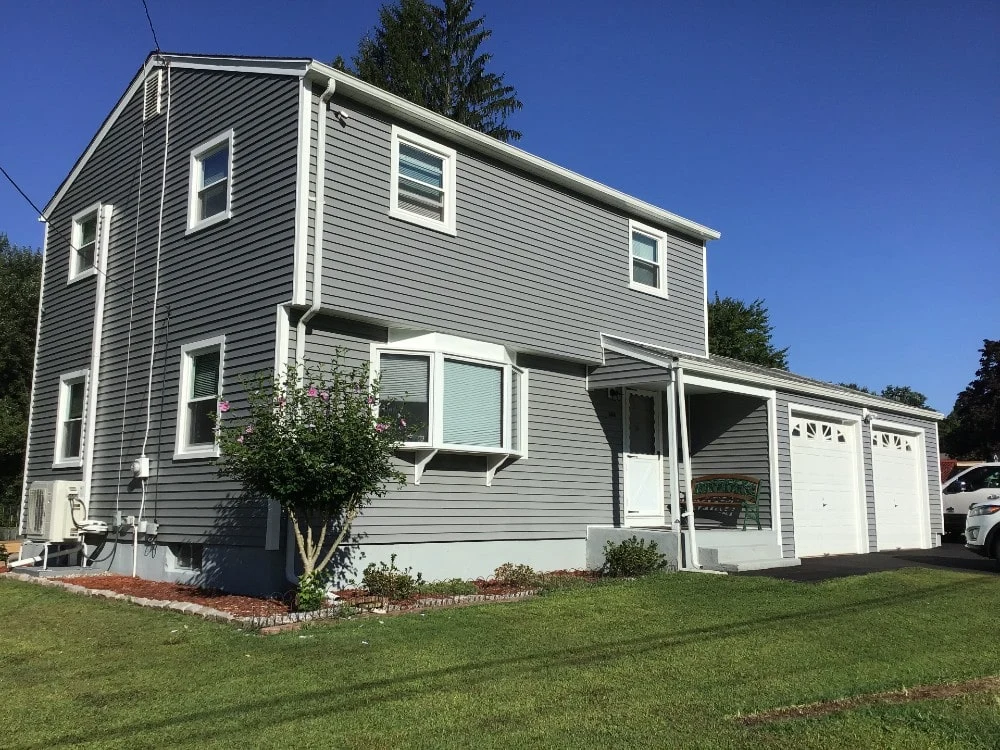
The main benefits of vinyl siding are durability, low maintenance, a wide choice of colors and styles, and a lower cost than most other exterior materials. For Connecticut homeowners comparing options for the outside of a house, here is how vinyl performs and what to know before you decide.
The Practical Benefits of Vinyl Siding
Durability in New England weather
Vinyl siding is made to stand up to rain, snow, wind and swings in temperature. It does not rot the way wood can, and insects do not eat it. When it is properly installed, it handles high winds, moisture and both summer heat and winter cold, which matters in a state that gets all four seasons at full strength.
Easy maintenance
Most people do not want to spend their weekends scraping, painting and repairing the outside of the house. Vinyl siding never needs paint or stain. Washing it from time to time to remove dirt and grime is usually all it takes to keep it looking good.
Affordability
Vinyl generally costs less up front than wood, brick or fiber cement. Add the lower maintenance costs over the years and it is one of the most budget-friendly ways to cover a house.
Energy efficiency
Insulated vinyl siding adds a layer of insulation to the exterior walls. That helps keep the inside of the house warmer in winter and cooler in summer, which can reduce what you spend on heating and cooling. Siding is only one part of the picture, though. Drafty windows and doors lose a great deal of energy, so vinyl replacement windows are often part of the same conversation.
Curb Appeal: Colors and Styles
Many homeowners assume all vinyl siding looks the same. That may have been true years ago, but it is not now. Vinyl siding is made in dozens of colors and in several profiles.
Horizontal clapboard is the most common choice. Other options include Dutch lap, scallops, fish scales and shakes, and some panels are textured to resemble the grain of natural wood. Mixing profiles, for example shakes in a gable above clapboard walls, gives a house a look of its own.
A fresh exterior matters if you ever decide to sell. Buyers form an opinion from the street, and a clean, well-kept facade is one of the exterior improvements that add value to a Connecticut home.
Safety and Environmental Questions
Is vinyl siding a fire risk?
Some people worry that vinyl siding will burn easily. Vinyl siding is made from polyvinyl chloride, or PVC, which is harder to ignite than many common building materials, including wood shingles. It needs a very high temperature to catch fire and is less likely to spread flames. It can still melt or warp when exposed to intense heat, so keep grills away from the walls.
Is vinyl siding bad for the environment?
Because vinyl is a manufactured product, people often assume it is a poor environmental choice. Life cycle assessments of cladding materials have rated vinyl siding ahead of brick and fiber cement on several measures. Vinyl siding also needs no paint or stain over its life, and insulated versions can reduce the fuel a home uses for heating.
Does vinyl siding protect against moisture?
Yes, when it is installed correctly over a proper water barrier. If you already see signs of water getting behind your current exterior, read our post on moisture damage and vinyl siding replacement.
Finish the Exterior With the Right Doors and Windows
New siding looks its best when the details around it are in good shape too. A worn front door or tired trim stands out against fresh walls. Updated entry doors and patio doors and a door canopy or window awnings complete the picture and add protection from the weather.
Talk to Aladdin About Your Home’s Exterior
Aladdin Inc is a family-owned exterior contractor based in Wallingford. If you are planning to update your windows, doors, railings or awnings, get in touch with our team or call (203) 776-9996 to ask about options and request an estimate.