
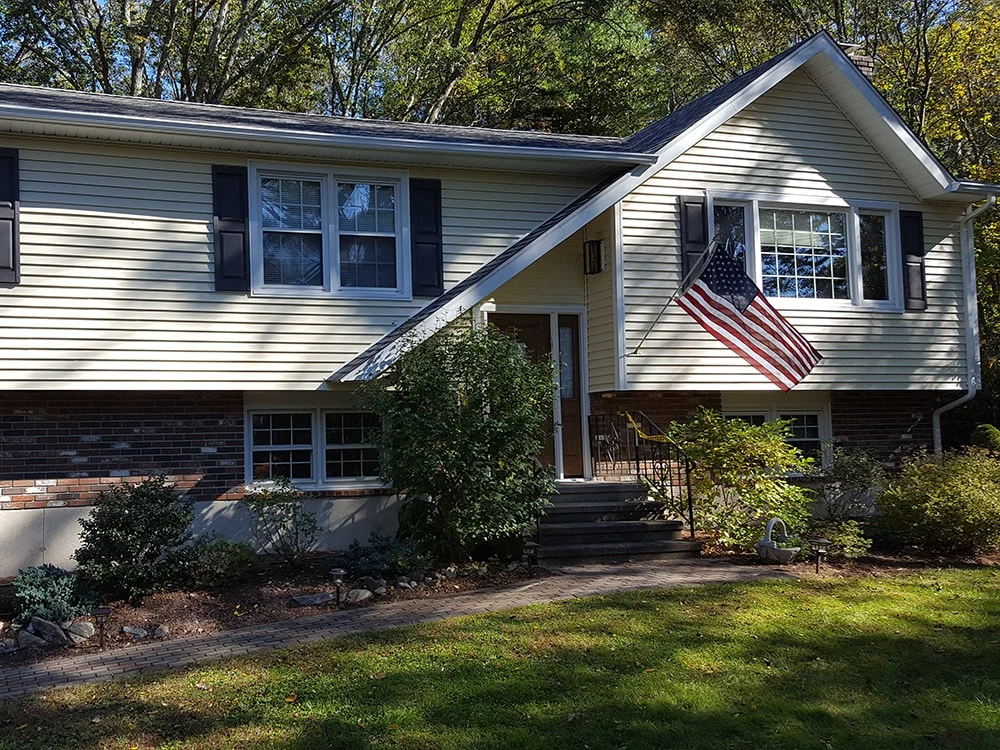
Insulated vinyl siding can help keep a home warm in winter by adding a continuous layer of insulation over the outside walls, which slows the heat that escapes through them. If your house felt colder than you would like last winter and the heating bills were high, worn-out siding that lets cold air through may be part of the reason. Here is how it works and what else to check.
How Insulated Vinyl Siding Keeps a House Warm
It Raises the R-Value of the Wall
R-value is a measure of how well a material resists the flow of heat. The higher the number, the slower heat passes through. When vinyl siding is installed with a layer of insulation between it and the existing shingles or wood siding, the wall’s R-value goes up and less heat is lost from the inside of the house in winter.
The same layer works in reverse in summer. Less outdoor heat gets through the walls on hot days, so the house stays cooler.
It Reduces Thermal Bridging
Wall studs conduct heat more readily than the insulation between them. This is called thermal bridging. In-wall insulation generally sits only in the spaces between the studs, so each stud is a small path for heat to leave the house.
Siding with insulation behind it covers the entire wall, studs included. That reduces the heat lost through the framing and helps keep rooms at a comfortable temperature.
Protection From Connecticut Winter Weather
Siding also has to stand up to the weather itself. An ice or hail storm can damage wood siding and create holes that lead to mold and rot under the surface. Wind-driven ice can scratch or chip paint.
Vinyl siding resists much of this damage, including strong winds and ice storms, and it never needs repainting afterward. It is also less expensive than some other cladding materials.
Walls Are Only Part of the Picture
Even well-insulated walls cannot keep a house warm if the openings in them leak. Windows and doors are where a great deal of winter heat is lost, and they are often the faster fix.
If you feel cold air near the glass or see frost on the inside of the panes, energy efficient vinyl replacement windows will make an immediate difference in comfort.
Check your exterior doors as well. A worn front door with failed weatherstripping lets in a steady draft. A new insulated entry door seals tightly, and adding a storm door creates a pocket of still air in front of it that helps hold heat in.
Frequently Asked Questions
Does vinyl siding by itself insulate a house?
Standard vinyl siding adds very little insulation. The benefit comes from the insulation layer installed with it or built into insulated siding products.
What is thermal bridging?
It is heat moving through the solid parts of a wall, such as the wood studs, which insulate less well than the insulation between them.
Should I replace siding or windows first to lower heating bills?
It depends on where the house is losing heat. If you can feel drafts at the windows and doors, start there. If the openings are tight and the walls are cold to the touch, look at the walls.
Find Out Where Your Home Is Losing Heat
Aladdin Inc has been providing home improvements for Connecticut homeowners since 1949. If drafty windows or doors are making your house hard to heat, we can measure them and give you a quote for replacements. Call (203) 776-9996 or ask for a quote online.