
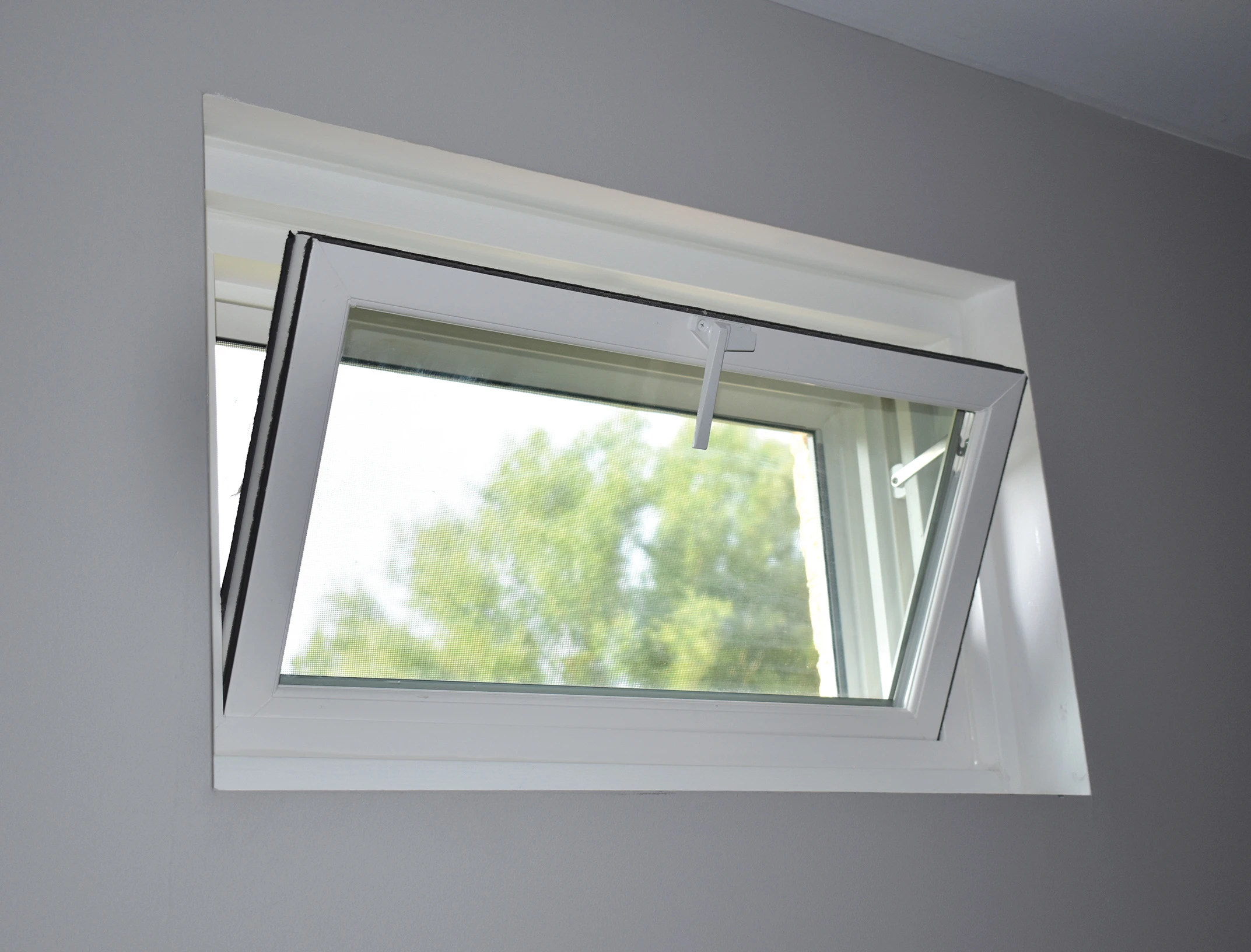
Hopper windows are small windows hinged at the bottom that tilt inward from the top. They are made for tight spots that need fresh air, which is why you see them most often in basements and bathrooms. If you are looking into hopper windows in CT, here is what they do well and where they fit.
What Is a Hopper Window?
A hopper window is a compact, usually wide and short window. The hinge is along the bottom edge, and the top of the sash tilts into the room when you open it. This lets air in while the opening stays small, which helps with privacy and security.
It is easy to confuse a hopper with an awning window. An awning window is hinged at the top and opens outward. A hopper is hinged at the bottom and opens inward, so it needs no clearance outside. That makes it practical low on a wall or close to the ground.
Where Hopper Windows Work Best
Basements
This is the most common use. Many Connecticut homes have finished or partly finished basements, and hopper windows bring in air without needing space outside at ground level. Better airflow also helps reduce the moisture and musty smell basements are known for.
Bathrooms
Hoppers are compact and easy to operate, so they suit bathrooms where privacy matters. Frosted or textured glass lets daylight in without a clear view from outside.
Laundry Rooms and Utility Spaces
Rooms that produce humidity benefit from extra ventilation. A hopper window gives you controlled airflow in a tight area where a full-size window would not fit.
Garages and Additions
On short walls or areas below eye level, a hopper window adds light and ventilation without using up much wall space.
Why Vinyl Hopper Windows Suit Connecticut Homes
Basement and bathroom windows live in damp conditions, so the frame material matters. Vinyl resists moisture and will not rot, and it needs very little maintenance beyond cleaning.
Vinyl hopper windows are also energy efficient. Because the sash presses tightly against the frame when closed, it helps keep out drafts during cold winters. That is a real benefit in a basement, where old metal-framed windows are often a major source of cold air.
Aladdin Inc. installs custom vinyl replacement windows made to fit each opening, including small basement and bathroom sizes.
Are Hopper Windows Right for Your Home?
If you need ventilation in a small space, a hopper window is a smart and cost-effective option. It is not meant to be the main window in a living room or bedroom. It does its best work in specific spots where airflow, durability and a tight seal matter most.
Many homeowners replace basement hoppers at the same time as the larger windows upstairs, so the whole house gets the same level of comfort and efficiency. If the basement has a walkout, a new entry door or patio door can close another source of drafts.
Frequently Asked Questions
Do hopper windows let rain in?
Because the sash tilts inward from the top, light rain tends to be deflected rather than falling straight into the room. In a heavy, wind-driven storm it is still best to close them.
Can a hopper window be used as a basement exit?
Most hopper windows are too small to count as an emergency exit. If a basement bedroom needs an egress window, check your local building code for the required opening size.
Are hopper windows secure?
Yes. Their small size and the way the sash locks against the frame make them a secure choice for ground-level openings.
Talk to Aladdin About Basement and Bathroom Windows
Replacing even a small window can make a noticeable difference in comfort. If you are considering hopper windows or other replacement windows for your Connecticut home, reach out to Aladdin Inc. or call (203) 776-9996. We can help you decide what fits your home and budget.