
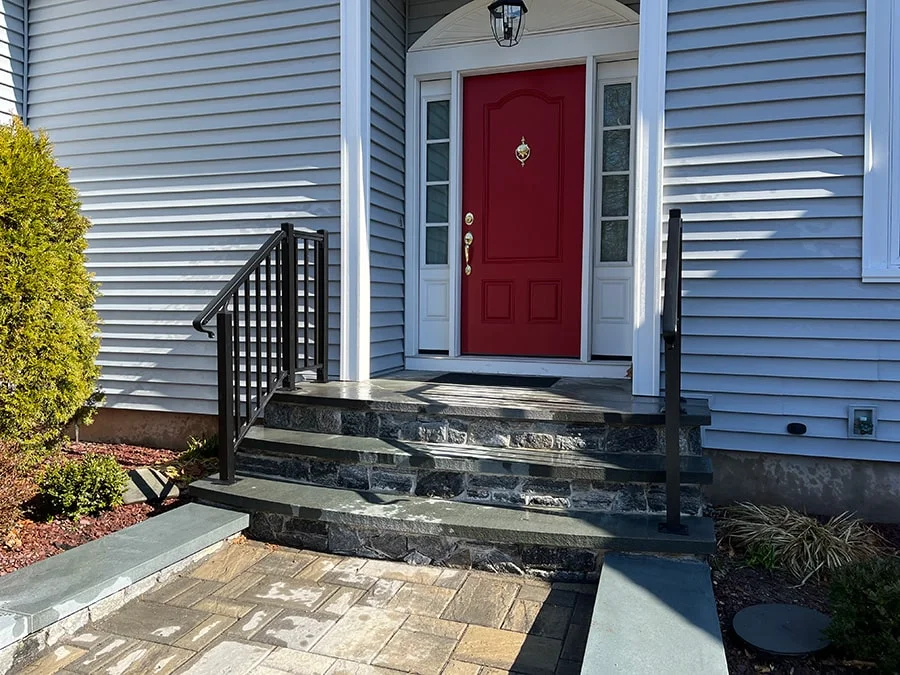
Choosing outdoor railings means balancing three things: safety, appearance and how much upkeep you are willing to do. Railings protect people from falls on steps, porches and decks, and they also add style and value to a home. The right material depends on where the railing will go, how it will be used, and the look you want.
Safety Comes First When Choosing Outdoor Railings
Think first about where the railing will be installed and who will use it. Front steps need a railing that gives a firm handhold in rain, snow and ice. A raised deck or porch needs a railing that keeps children, guests and pets away from the edge. A stairway used by an older family member needs a rail that is comfortable to grip the whole way up.
Once the safety job is clear, style follows. A well-chosen railing frames the entrance or deck and makes the whole exterior look finished. If you are considering aluminum or wrought iron railing installation, both materials can do the safety job well and both come in many designs.
Match the Material to the Job
Every railing material has advantages and disadvantages. Durability, maintenance and appearance are the main points to compare.
Wood
Wood railings are common on decks and have a natural look. The drawback is upkeep. Wood exposed to rain and snow can crack, split or rot over time, so it needs regular staining or painting and periodic repairs.
Wrought Iron
Wrought iron is the classic choice. It is very strong, it gives many years of service, and it suits everything from a traditional colonial to a cottage-style home. It comes in many styles, from simple straight pickets to ornate scrollwork. Iron does need its finish kept in good condition, because bare iron exposed to moisture can rust.
Aluminum
Aluminum railings are sturdy, lightweight and available in many styles, from clean modern lines to designs that resemble traditional railings. Aluminum does not rust, and a powder-coated finish holds its color with very little maintenance. That makes it a practical pick for decks, porches and steps that see a lot of weather.
For a side-by-side comparison of the two metals, read our post on the differences between wrought iron and aluminum railings.
Think About Maintenance and Rust Resistance
Connecticut weather is hard on anything outdoors. Rain, snow, road salt and freeze-and-thaw cycles all wear on a railing. Before you choose, be honest about how much maintenance you want to do.
Rust-resistant materials such as powder-coated aluminum need little more than an occasional cleaning. Wrought iron asks for a bit more attention to its finish in exchange for its strength and traditional character. Wood needs the most care of the three. Our article on making your home safer in winter with an outdoor railing has more on cold-weather use.
Choose a Style That Suits Your Home
Railings come in a wide range of designs, colors and finishes. A sleek, simple railing suits a newer home, while a more ornate design complements an older house with traditional architecture. Railings can match your trim or front door, or contrast with them so they stand out.
It helps to look at the entrance as a whole. If the steps are also exposed to rain and snow, a door canopy above the entrance works well alongside new railings to keep the landing drier.
Why You Should Hire a Contractor to Install Railings
Installing railings is not as simple as it looks. Outdoor railings must meet height requirements to comply with local building codes. They must be straight and securely anchored, and the openings must be narrow enough to prevent injuries.
Even if you enjoy DIY projects, you will probably be better off having professionals install railings on your stairs or deck. A small miscalculation in planning or a minor error during installation can leave you with railings that fail a building inspection. If that happens, you may have to take them down and start over, which costs both time and money.
Frequently Asked Questions
What is the lowest-maintenance outdoor railing material?
Powder-coated aluminum is one of the easiest to live with. It does not rust and does not need painting or staining the way wood does.
Are wrought iron railings worth it?
For many homeowners, yes. Wrought iron is very strong, lasts for many years and has a classic look that is hard to match. It suits traditional homes especially well.
Do outdoor railings have to meet building code?
Yes. Codes set requirements for things like railing height and the size of openings. A professional installer will know the rules that apply in your town.
Get Help Choosing Railings for Your Connecticut Home
Aladdin installs aluminum and wrought iron railings on steps, porches and decks across Connecticut. To see the styles available and get an estimate for your home, contact Aladdin about railing installation or call (203) 776-9996.