
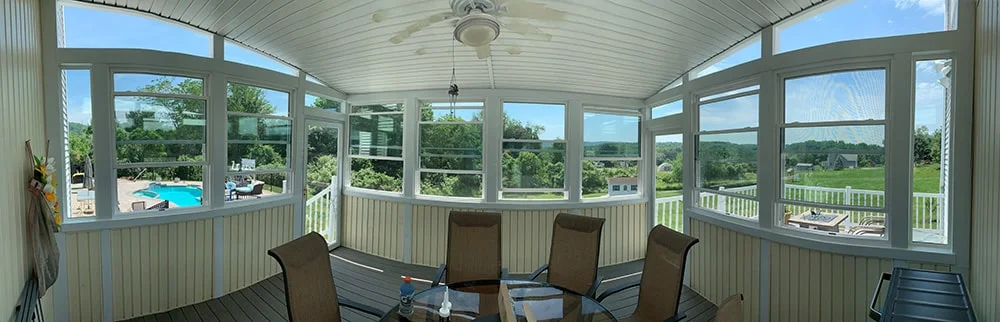
If you are wondering how to clean vinyl windows, the short answer is mild soap, water and a soft cloth. Vinyl does not rot, peel or rust, so it needs very little care, and regular gentle cleaning is enough to keep the frames and glass looking new for years. Below are the steps for the outside and the inside, plus what to do about stubborn spots and sticky hardware.
Why Vinyl Windows Are Easy to Care For
Few window materials hold up as well as vinyl. It is weather resistant and durable, and it does a good job keeping out extreme temperatures, drafts, snow and rain. That is a big part of why vinyl replacement windows are such a common choice for Connecticut homes. For more on what sets the material apart, see our guide to vinyl window features and selection and our overview of window types for your home.
How to Clean Vinyl Windows on the Outside
Heavy rainfall often keeps the exterior of vinyl windows fairly clean. When they need extra help, a garden hose, gentle soap and a bit of wiping by hand will do the job.
Use gentle pressure with the hose. A high-pressure nozzle or power washer can force water in around the edges of the window. Start at the top of the window and work your way down so dirty water does not run over areas you have already cleaned.
Mix a mild dish detergent with water, using as little soap as possible so no residue is left behind. Wipe the frames with a soft cloth, and use a soft-bristled brush to get grit and dirt out of hard-to-reach places.
How to Clean the Inside of Vinyl Windows
The interior side needs cleaning more often because it never gets rinsed by rain. Use water with a gentle soap, or a mix of water and vinegar at about 10 to 20 percent vinegar.
Do not use harsh products, such as those with bleach or strong solvents, because they can damage the vinyl. Commercial glass cleaners such as Windex can be used on interior windows, but they are more prone to leaving streaks. Always use a soft cloth instead of an abrasive pad. Abrasive pads can leave scratches in the vinyl, and those scratches collect dirt.
Dry the window with a fresh soft cloth or a squeegee. Take care with a rubber squeegee, since a damaged blade or poor technique can leave streaks that are hard to remove.
Removing stubborn spots
For adhesive, paint, crayon and other substances that will not respond to soap and water, spot clean the area with denatured alcohol or isopropyl alcohol. If alcohol does not work, try a commercial spot remover such as Goof Off. Afterward, wash the area with your mild cleaning solution to remove any trace of the stronger product.
Lubricate the Moving Parts
Lubricating the hinges, rollers and other moving parts keeps your vinyl windows working smoothly. First clean the hardware with soap and water, avoiding abrasive cleaners. Then apply a small amount of silicone-based lubricant.
Frequently Asked Questions
Can I pressure wash vinyl windows?
It is better not to. High pressure can force water in around the edges of the window. A garden hose on gentle pressure is enough.
Is vinegar safe for vinyl windows?
Yes, when it is diluted. A mix of 10 to 20 percent vinegar in water works well on the interior side.
What should I never use on vinyl window frames?
Avoid bleach, strong solvents and abrasive pads. They can damage or scratch the vinyl.
Spot Damage While You Clean? Here Is What to Do
Cleaning day is a good time to check for cracks, warping and other signs of damage. If you find them, it may be time for new windows. Our article on what vinyl replacement windows are explains the basics, and you can contact Aladdin for an estimate on energy-efficient windows that help keep utility costs down and improve your home’s curb appeal. If your doors are showing their age too, ask about entry doors and patio doors at the same time.