
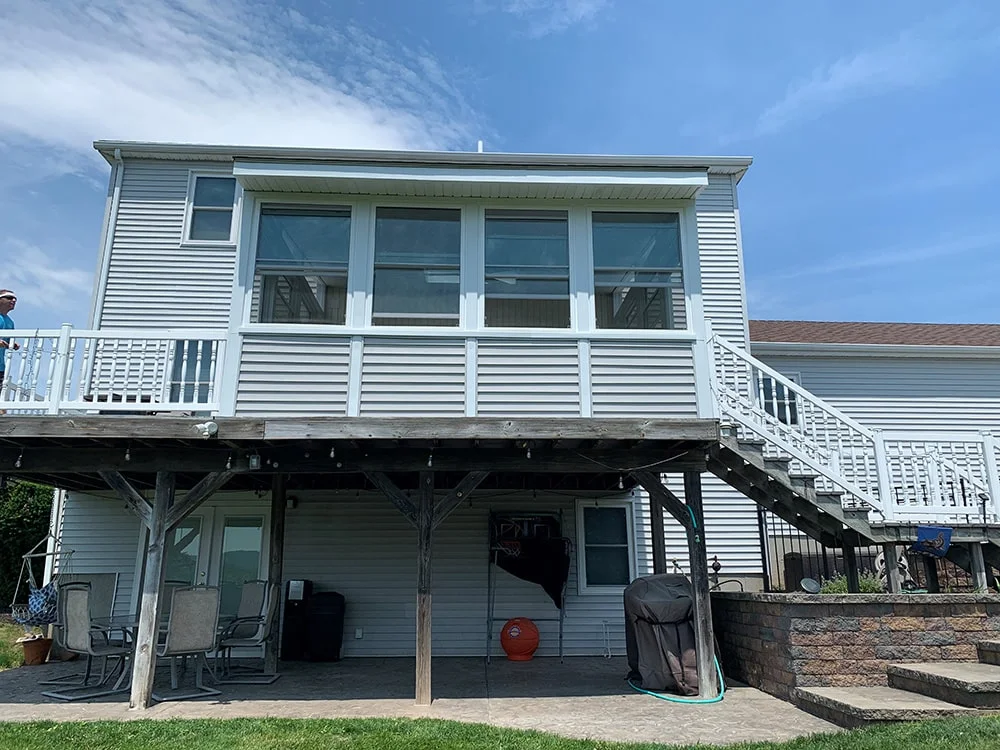
Good severe weather protection for a house starts with its openings: the windows, the doors and the roof. Wind and water that get in through a weak window or door cause much of the damage homes suffer in storms. Preparing before the forecast turns bad is far easier than repairing afterward.
The National Association of Home Builders (NAHB) recommends that homeowners equip their homes ahead of time with what they need to withstand a severe storm. Here is what that advice looks like in practice for a Connecticut home.
Severe Weather Protection Starts With Windows and Doors
Seal the windows and doors
Leaky windows and doors are responsible for much of the damage that happens in storms. Upgrading them, or sealing the ones you have, helps keep wind and water from entering through windows, cracks, entry doors and garage doors.
Wind that funnels into a house pushes upward and can lift the roof, which lets heavy rain damage the interior. This step is especially important in hurricane-prone regions.
Replace old windows or add storm windows
If your windows are old, it may be time to consider replacing them. New vinyl replacement windows seal tightly and stand up well to moisture and temperature swings. Not sure whether yours are due? Here are signs it is time to replace your windows.
Another option is adding aluminum-frame storm windows that are custom-built to fit tightly over your existing windows.
Install functional shutters
Many homes have decorative shutters that do nothing in a storm. Houses in storm-prone areas benefit from functional shutters designed to protect windows, French doors, skylights and other vulnerable openings.
Doors That Stand Up to High Winds
Consider a steel entry door
The NAHB recommends that homes in storm-prone areas consider steel entry doors. Steel doors are built to withstand impact and wind better than traditional wooden or aluminum doors.
Double doors, French doors and sliding patio doors deserve extra attention, because high winds can tear through doors that have no structural support between the two sides. If an older wood door is already soft or damaged, see our post on what to do about a rotting wood front door.
Add a storm door
Storm doors help protect your entry during severe weather. They also add thermal efficiency through the winter, which can help you save on heating costs. Read more about how a storm door can lower winter heating bills.
Do Not Forget the Roof
The roof is one of the most vulnerable parts of a home. If it is damaged, water can pour in during a storm. Make sure the roofing is intact and that sealant is applied around vents, chimneys and other openings.
If you are not sure about its condition, have a roofing specialist evaluate it before storm season.
Frequently Asked Questions
What is the most important step in protecting a home from storms?
Keeping wind and water out. That means windows and doors that close and seal tightly and a roof in good repair. Once wind gets inside a house, the risk of serious damage rises quickly.
Do storm doors really help in bad weather?
Yes. A storm door adds a second barrier in front of the entry door, shielding it from wind-driven rain and snow. It also cuts drafts in winter.
Are decorative shutters enough to protect windows?
No. Decorative shutters are fixed to the wall for looks and do not close over the glass. Only functional shutters made for storm protection shield a window.
Get Your Home Ready Before the Next Storm
Aladdin has worked on Connecticut homes since 1949. If your windows, entry door or storm door are showing their age, contact us or call (203) 776-9996 to talk about replacements before the weather turns.